-
Loyalty Points

-
Stamp Programmes

-
Sign In

-
Basket
 0 item(s) - £0.00
Your shopping cart is empty!
0 item(s) - £0.00
Your shopping cart is empty!
 0 item(s) - £0.00
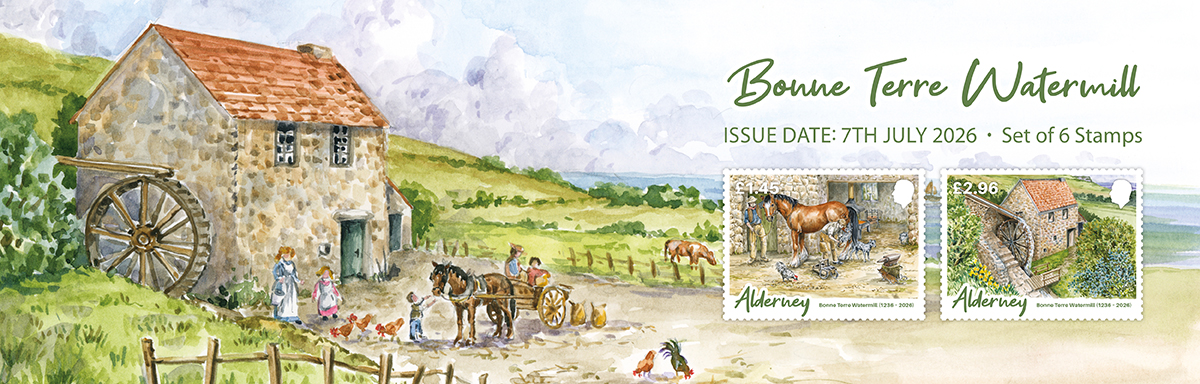
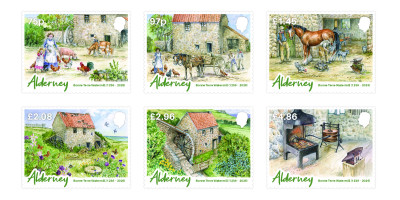
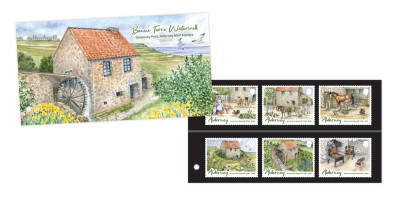
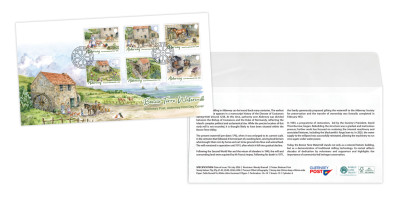
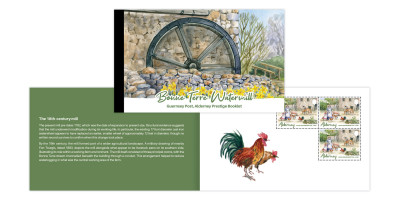
The history of milling in Alderney can be traced back many centuries. The earliest known reference appears in a manuscript history of the Diocese of Coutances dating from around 1236. The present mill pre-dates 1792, which was the date of expansion to present size. The Bonne Terre Watermill served the needs of the local farming community for many years. The Alderney Society recorded that farmers would bring their corn to the mill several times a year, transporting it by horse and cart. The grain was tipped into a chute on the upper floor and fed down to the grinding stones, where it was processed into flour and animal feed.
The acquisition of the watermill presented the Alderney Society with both an opportunity and a challenge. By the early 1980s, little remained of the original structure beyond a ruin, and for many years the site continued to decline, becoming overgrown and inaccessible. A turning point came in 1993, when a renewed commitment to the project was led by the Society’s President, David Thornburrow. Plans to dispose of the site were abandoned, and instead a programme of restoration was initiated. Today, the Bonne Terre Watermill stands not only as a restored historic building, but as a demonstration of traditional milling technology.
Today, the Bonne Terre Watermill stands not only as a restored historic building, but as a demonstration of traditional milling technology. Its revival reflects decades of dedication by volunteers and supporters, highlighting the importance of community-led heritage conservation.
We extend our sincere thanks to the Alderney Society for their invaluable assistance regarding the Bonne Terre Watermill.
| Date of Issue | 7 July 2026 |
| Printer | Brebner Print |
| Values | 75p, 97p, £1.45, £2.08, £2.96, £4.86 |
| Process | Offset Lithography |
| Stamp Size | 30mm deep x 40mm wide |
| Illustrators | Wendy Bramall |
| Paper | Tullis Russell Tru White Litho Gummed 110gsm |
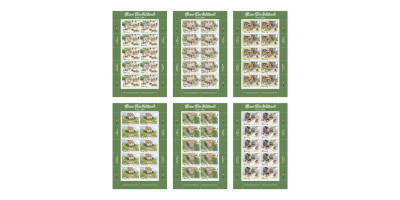
| Sheet | 10 |
| Perforation | 14 x 14 |
| Cylinder | A |